What Is Esports? A Beginner’s Guide to Competitive Gaming
What Is Esports? A Beginner’s Guide to Competitive Gaming
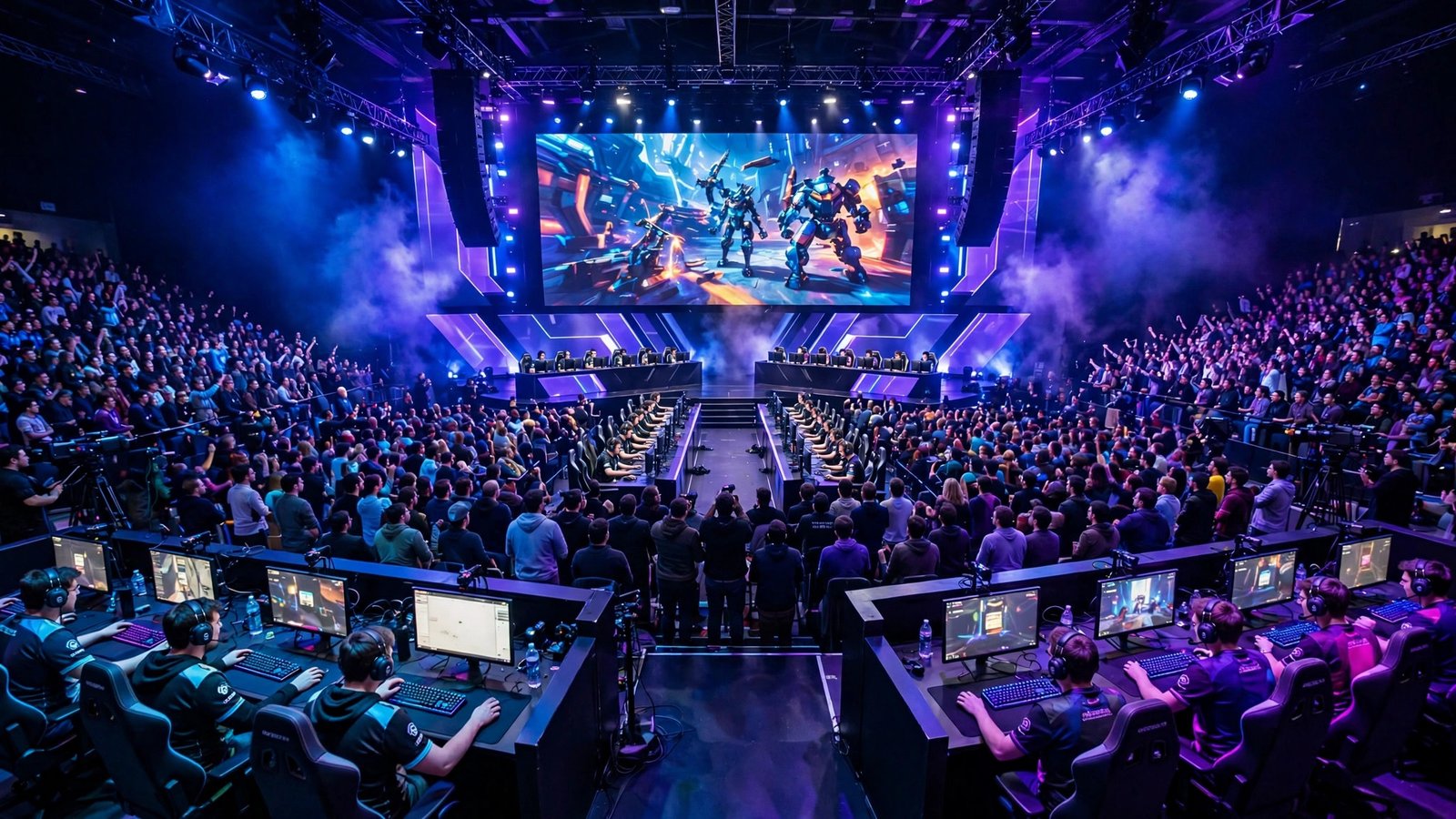
If you have ever seen a packed arena cheering for a team playing a video game on a giant screen, or millions of people tuning in online for a final match, you have already seen esports in action. But what is esports, exactly — and how did playing games become a global spectator sport?
At its simplest, esports is organized, competitive video gaming. Professional players and teams compete in popular games, often in leagues and tournaments with prize money, sponsors, coaches, and passionate fans. Think of it like football or basketball: the game is different, but the skill, strategy, teamwork, and pressure are very real.
This guide is for total beginners. By the end, you will understand where esports came from, which games matter most, how professionals make a living, and how you can start watching — or even competing — yourself.
What Is Esports? Definition
Esports, short for electronic sports, is multiplayer video gaming played competitively, usually by professionals, for an audience. Matches take place online, in a studio, or live in front of thousands of fans in an arena.
Not every video game is an esport. A game becomes one when it has:
- A competitive structure — clear rules and a clear way to win and lose
- Skill-based play — success comes from practice, reflexes, and teamwork, not luck alone
- An organized scene — leagues, tournaments, rankings, and regular seasons
- An audience — fans who watch broadcasts and follow their favorite teams and players
That last point surprises most newcomers. Esports is not just about playing — it is about watching the best players in the world do things most people simply cannot do, just like watching a professional athlete.
A Brief History of Esports
Competitive gaming is older than most people realize. In the early 1980s, players competed for high scores in arcade classics. In the 1990s, home consoles, PCs, and faster internet meant players no longer had to be in the same room to compete.
A turning point came in South Korea in the late 1990s and early 2000s, where the strategy game StarCraft became a cultural phenomenon with professional teams and televised matches. South Korea showed the world what a mature esports scene could look like.
The 2010s changed everything. Twitch and other streaming platforms made live matches free to watch from anywhere. Games like League of Legends and Dota 2 built massive scenes, prize pools grew, and finals began filling famous arenas. Today, major events draw audiences that rival traditional sports broadcasts.
The Main Esports Game Genres
Most major titles fall into a few genres, and each feels very different to watch.
MOBA — Multiplayer Online Battle Arena
Two teams of five each control a unique hero or champion with special abilities, grow stronger during the match, and try to destroy the enemy base. League of Legends and Dota 2 are the giants here. MOBAs reward strategy, map awareness, and teamwork — matches often feel like high-speed chess.
FPS — First-Person Shooters
FPS games put you in the eyes of your character. In tactical shooters like Counter-Strike 2 and Valorant, teams take turns attacking and defending objective sites. Rounds are short, tension is high, and one precise shot can change everything — and beginners can follow easily because you see what the player sees.
Battle Royale
Battle royale games drop a large number of players — often around 100 — onto a shrinking map, and the last player or team standing wins. Titles like Fortnite and Apex Legends brought this format mainstream, and the mix of survival and sudden firefights makes every match unpredictable.
Sports Simulations
Sports sims recreate real-world sports, most famously football in the EA Sports FC series, along with basketball, American football, and racing. They are a natural bridge for traditional sports fans, because the rules already feel familiar.
Fighting Games
Fighting games are one-on-one duels in series like Street Fighter and Tekken. There is no team to rely on — just you, your opponent, and your ability to read their next move. This community is one of the oldest in esports, built on local tournaments.
The Biggest Esports Tournaments to Know
Every major game has a championship event:
- League of Legends World Championship (Worlds) — League of Legends’ end-of-year crown, famous for spectacular opening ceremonies and enormous global viewership.
- The International — Dota 2’s flagship championship, historically known for prize pools reaching into the tens of millions of dollars, raised largely with help from the game’s community.
- Counter-Strike 2 Majors — The most prestigious events in Counter-Strike, followed by one of the most loyal audiences in esports.
- Valorant Champions — The world championship finale of the Valorant Champions Tour, capping a season of regional leagues and international events.
Winning one of these events can define a player’s entire career.
How Professional Players Earn Money
Can people really make a living playing games? For top professionals, yes — and income usually comes from several sources at once:
- Salaries — Players signed to professional organizations are typically paid a regular salary.
- Prize winnings — Teams split prize money from tournaments where they place highly.
- Sponsorships — Brands pay organizations and popular players to promote gaming gear, tech products, and more.
- Streaming and content — Many pros stream their play and earn from subscriptions, donations, and ads. For some retired pros, streaming becomes even more lucrative than competing.
Be realistic, though: only a small percentage reach the top level, careers can be short, and behind every star is years of daily practice.
How Teams and Leagues Work
Most professionals belong to esports organizations — teams with names, logos, jerseys, coaches, and analysts, just like traditional sports clubs. One organization often fields teams in several different games.
Leagues organize the season. Some, like League of Legends’ regional leagues, use a partnership model with a regular schedule leading to playoffs. Others use open circuits, where any strong team can qualify through preliminary tournaments. Either way, fans get storylines: rivalries, underdogs, and championship runs. Behind the players are coaches, analysts, and managers handling strategy, opponents, and schedules.
How a Beginner Can Start Watching Esports
Getting into esports as a fan is easy, and free:
- Pick one game you already know or like. If you play it casually, pro matches will make sense much faster.
- Watch a major final first. Finals have the best production, clearest commentary, and most exciting atmosphere.
- Listen to the casters. Good commentators explain strategies and storylines in real time — they are your built-in teachers.
- Follow one team or player. Having someone to root for makes every match more meaningful.
- Use free platforms. Most tournaments stream live on Twitch and YouTube, with full replays posted afterward.
Do not worry if you miss details at first — every fan started as a beginner.
How to Start Competing Yourself
Every pro today started as an amateur. Your path can look like this:
Start With Ranked Play
Almost every major title has a ranked mode that matches you against players of similar skill. Treat it as your training ground: focus on one game, learn one role deeply, and review your mistakes after losses.
Join Amateur Leagues and Tournaments
Once you are comfortable, look for community tournaments, online amateur leagues, school or university teams, and local events. Playing on an organized team teaches communication and strategy in a way solo play never will.
Practice Like It Matters
Consistent, focused practice beats occasional marathon sessions. Set specific goals — aim, map awareness, or decision-making — and track progress over weeks, not days.
Frequently Asked Questions
Is esports considered a real sport?
It depends on your definition, but esports requires intense training, fast reflexes, strategic thinking, and teamwork, and it is recognized by many sporting bodies and universities. Whether or not you call it a sport, the competition is undeniably real.
How old are most professional esports players?
Many pros start in their late teens and peak in their early to mid-twenties, although this varies by game. Many former players move into coaching, commentary, or streaming.
Do I need an expensive PC to start playing competitively?
No. Most popular titles are designed to run well on modest hardware. A stable internet connection and consistent practice matter far more than top-end gear.
Can I watch esports for free?
Yes. Most tournaments stream live for free on Twitch and YouTube, with replays on demand. Attending a live arena final is usually the only part that requires a ticket.
Conclusion
So, what is esports? It is competitive gaming grown up — professional players, real teams, huge tournaments, and millions of fans who care deeply about the outcome. Whether you come for the strategy of a MOBA, the tension of a tactical shooter, or the chaos of a battle royale, there is a corner of esports waiting for you. Start by watching one big final, pick a team to follow, and see where it takes you.